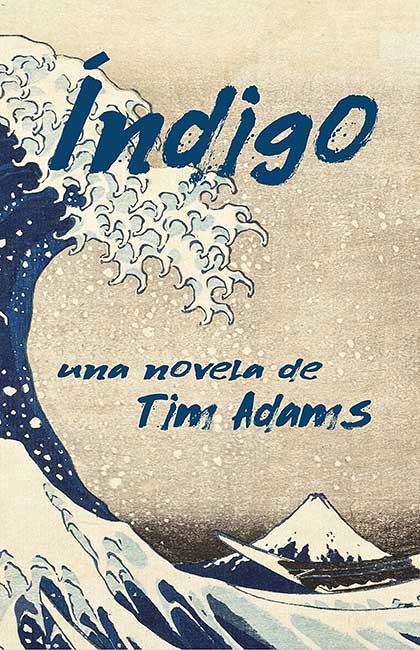
… wasn’t the best idea I’ve ever had, although I’m at least content with the result yielded by three subsequent months of arduous editing. You can visit bluetowerpress.com to download a copy of the translated novel now, if uninterested in how I spent those months cursing hoarsely and pink-faced at AI’s inadequacies. The inadequacies are the subject of this post.
I confessed a yen to translate my second Great California Novel last November. DeepL quickly seduced me: if I opened a trial pro account and uploaded an appropriately formatted file, the German AI company would translate the whole 83,000+ word book in one go.
This I did. I think conversion took a half-hour. I quickly spotted problems with the result, but assumed that these would amount to so much hexadecimal lint, that I’d need only a read-through to brush off the lint before desktop publishing a Spanish edition.
Ha ha ha ha.
The lint turned out to be sticky, stubborn, and pervasive; nearly every other page posed a problem, and some problems were messy. “Better get help from a pro,” I thought, but learned when I tried to hire one that my use of AI seemed to have boxed me into a corner. The mention of “translation with AI” in my introductory email as much as guaranteed a non-response.
Fortunately, a friend put me in touch with an autónoma who helped repair the passages I couldn’t fix myself. Even then I wasn’t satisfied, and called on help from several Madrileños. Without their collective professional and amateur feedback, I might have been stranded.
HOW AI FAILS: I COUNT THE WAYS
(Fails, that is, in the translation of fiction with literary aspirations. If you’ve caught a weird letch to see how your shopping list looks in Kyrgyz or Punjabi, DeepL is your pal.)
Jargon: I know some Spanish slang. I enjoy saying “me piro” to Spaniards when I’m about to leave, as they don’t expect pirarse to be used by a guiri. A friend’s teenage daughters tell him that their peers refer to gossipy chat as “salseo,” and that they might dismiss a bad suggestion with an airy “no me renta.”
But I did not grow up in Spain as a native Spanish speaker, do not feel this slang in my heart. It’s easy to blunder.
“You look really bummed,” says a suicide hotline supervisor in my novel’s second chapter, when his trainee appears inappropriately vexed by a call. DeepL wouldn’t risk a slang translation, gave me “pareces muy deprimida.” (With a gender error, as the trainee is male.) I researched, settled on “pareces totalmente depre,” edited it in after getting a green light from a native Madrileña.
But that’s work, on my part. I’m not brushing off lint in an easy afternoon. I’m doing research and making phone calls, hacking it off with a chisel.
Further, I couldn’t salvage everything. I’m confident that the 1970s hot rodder’s girlfriend of Chapter Eighteen might refer to his SS Chevelle as “bitchin’”, but how do you say “bitchin’” in Spanish? DeepL had chosen the anodyne “guay,” and I couldn’t do any better. Loss. Lines fall flat, don’t work as well.
Inappropriate word choice: My novel includes hitchhiking scenes. I badly wanted to accept DeepL’s choice of “aventón,” as it can be translated to “lift” or “ride.” Alas, it offers that meaning only in the Americas. In Spain, the word might as well not exist.
“I love you” translates as “Te amo.” DeepL certainly thought so … and thought correctly, for, perhaps, an exchange of vows in Buenos Aires on a thirtieth wedding anniversary. Young lovers in Spain would much likelier say “Te quiero.”
“Matter-of-factly” was a particular problem. DeepL’s neural network had decided that this means “con naturalidad.” Sometimes it does, but not always. A really smart neural network would have absorbed the contents of this excellent WordReference post, which describes many content-appropriate alternatives.
These nuances matter, can matter a lot, and not only in fiction. A possible misinterpretation of the Japanese word “mokusatsu” may have convinced American leaders to drop the atomic bomb on Hiroshima. Really.
Phrasing problems: DeepL admirably translated some tough paragraphs on its own. If it couldn’t, though, it was happy to hijack an innocent adjective into a graceless, galumphing, mud-stomping clause, with nary a thought to how that hijacking affected a paragraph’s rhythm. The literal meaning was preserved, yes; aesthetics were my problem, not the computer’s.
Lint, lint and more lint: Occasional gender errors, as in the “pareces muy deprimida” cited earlier. I sometimes still struggle to choose between preterite and imperfect, after nearly ten years in Spain. So does DeepL. I don’t struggle to choose between tú and usted, but DeepL can.
No customization: An AI-savvy acquaintance said that I might have had better translation results by feeding a few pages of text at a time into a chatbot like Claude or Chatgpt (or a nifty aggregator, eye2.ai), and including prompts to hone results. “Translate to Peninsular Spanish,” or “use leísmo acceptable to the RAE.” DeepL Pro offered no such option, or none that I saw.
VERDICT
• Some Reddit readers feel that a translation can be better than the original. Well, this one isn’t. Índigo in Spanish loses some oomph. Not a lot, I hope, but some.
• I’d give odds that I didn’t exterminate all grammar, tense and spelling errors in the Spanish edition. I slew lots and lots, but didn’t get ‘em all. I don’t proofread in Spanish as I do in English.
* * * * *
I fear sounding like an ingrate. These artificial intelligence tools collectively pose major problems for society, yes, but they are still remarkable technological tours de force, offer obvious and indisputable benefits to billions worldwide. Am I only to gripe and cavil about services that are offered to me for nothing, that help me, that I could never create myself?
I’ll run this post through an AI translator before posting the Spanish version. It’s easier to edit AI’s preposition and pronoun choices than write from scratch.
But that’s for a blog post. AI isn’t ready to translate novels, except for the cheapest type of formula fiction. At least not yet.
IF I HAD IT TO DO OVER AGAIN
I’d see if I could budget from the start for a professional translator, but I’d be picky about the translator hired.
I read Dostoyevsky’s novels in my salad days, and believed then that I preferred translations by Constance Garnett. I discover now that this is controversial; native Russian speakers have accused her of watering down Dostoyevsky’s prose for the sake of accessibility. A modern translation by Richard Pevear and Larissa Volokhonsky might read like a different book.
A fiction translator is an aesthete of necessity, makes subjective judgments about vocabulary, phrasing. As a client, I arrive with the major advantage of fluency in the target lingo. I’d look for a translator with fiction experience, study both the English and Spanish versions of at least one of the translated works, and ask Madrid friends what they thought of the Spanish used. I might even find a professional who can translate bitchin’.
The mention of Dostoyevsky reminds me of a Madrid anecdote that is UTTERLY UNRELATED to anything else in this post, but which I shall shamelessly duct-tape to the hindquarters of this entry, as it won’t be told otherwise:
A.P. grew up in the Soviet-era Eastern Bloc, indignantly dropped out of a Russian-Spanish language exchange at the start of the Ukraine war. It angered her that participants continued to merrily swap tongues as if Putin’s invasion hadn’t occurred.
A.P. had shared two Russian-on-the-street Q&A videos by vlogger Daniil Orain (1,2), had agreed with my hunch that Orain was likely self-censoring. I asked if she could explain why at least some Russians might support the war, given the general (and understandable) lack of enthusiasm shown by the Muscovites interviewed in the Orain vids. She surprised me by speaking of a Russian messianic complex (?!?!; completely unfamiliar to me), a concept of Russia as a moral bastion. This wasn’t recent, she said; I could find a harbinger in Dostoyevsky’s Demons.
“Now that’s one Dostoyevsky novel I never read,” said I, and probed, and was surprised to sense a sudden reluctance in A.P.’s responses, an evasiveness. There was something she didn’t want to tell me.
Soon, I figured out what it was.
She hadn’t read Demons in Spanish, or English, for that matter. I practically had to corner her into ADMITTING that she’d read it in the original Russian. She was so disgusted by the Ukraine invasion that she didn’t want to admit that she has full fluency in one of the world’s most important tongues.